Exploring Extended Reality in Teaching & Learning at CSUN
At our recent Faculty Retreat in the Reseda Room, we explored how Extended Reality (XR) is transforming higher education and why CSUN is well positioned to lead in immersive learning innovation. Immersive technologies are experiencing a powerful resurgence across higher education and industry, and CSUN is actively engaging in this momentum.
Together with Charles Mahoney from the Faculty Technology Center and Leo Jacinto Magtibay from the Global HSI Equity Innovation Hub, Vahe Karamian joined the conversation as faculty in the Computer Science Department and Lead Architect of NucleusXR.
Collectively, we discussed how Virtual Reality (VR) can meaningfully enhance teaching, learning, and student engagement across disciplines.
From Novelty to Pedagogical Strategy
A central message of the workshop was clear: VR is not a novelty tool, it is a pedagogical bridge between theory and practice. Immersive learning allows students to “do” rather than just “watch.” Whether simulating complex clinical scenarios, exploring reconstructed historical environments, or manipulating molecular structures, VR creates experiential opportunities that are otherwise difficult, costly, or unsafe to replicate in traditional settings.
Recent research highlighted during the session demonstrates that immersive VR significantly enhances student engagement, improves comprehension and retention, and strengthens emotional connection to learning. Immersive environments align closely with active learning strategies and Universal Design for Learning (UDL), offering multiple pathways for students to demonstrate understanding.
Importantly, immersive experiences can foster empathy and perspective-taking, allowing students to engage with diverse viewpoints in ways that deepen human connection and inclusive learning.
XR Across the Disciplines
The session emphasized that XR is not confined to a single field, it is a cross-disciplinary innovation.
Health Care & Education
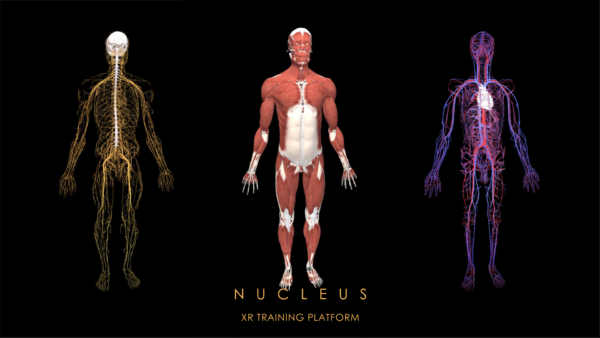
Students can practice clinical procedures, explore detailed 3D anatomical models, analyze biomechanics, and rehearse classroom management strategies in realistic virtual environments. Special education simulations can support empathy-building and social skills development in controlled, reflective settings.
STEM Fields
VR enables students to design and iterate 3D engineering prototypes, step inside biological systems, simulate environmental fieldwork, and develop XR applications using industry standard tools such as Unity. Visualization becomes experiential, transforming abstract concepts into tangible learning experiences.
Business, Arts & Humanities
Immersive technology opens new avenues for storytelling, communication, and professional skill development. Students can practice presentations in simulated boardrooms, explore supply chain logistics, create 360° journalism experiences, reconstruct ancient cities, prototype theatrical set designs, and engage in perspective driven storytelling in Ethnic Studies.
These examples demonstrate how XR creates interactive, engaging, and meaningful connections between teaching and learning across the university.
XR + AI: Smart Immersive Learning
An exciting frontier discussed during the workshop is the convergence of XR and Artificial Intelligence. AI-driven non-player characters (NPCs) can facilitate realistic dialogue for language learning or interview practice. Systems can provide personalized, real-time feedback during simulations. Creation tools leveraging platforms such as Unity and generative AI enable faculty to design immersive learning modules more efficiently than ever before.
This convergence supports what we describe as Smart Immersive Learning, dynamic, responsive environments that adapt to student performance and deepen engagement.
A key highlight of the session was the introduction of NucleusXR, an enterprise grade XR training and simulation platform. NucleusXR bridges the gap between fully custom XR development and static off-the-shelf applications. It provides modularity, scalability, intuitive content creation tools, hardware compatibility, real-time analytics, and AI-powered module generation.
With NucleusXR, faculty can upload instructional documents, generate structured learning modules, refine them through an authoring interface, and deploy them across supported XR devices—without rebuilding applications from scratch. By lowering technical barriers, NucleusXR makes immersive classroom integration practical, sustainable, and scalable for CSUN.
Tools, Platforms, and Hands-On Exploration
Faculty were introduced to a range of educational applications available on Meta Quest and Apple Vision Pro devices, including:
- Engage for collaborative virtual classrooms
- ShapesXR for 3D prototyping and spatial reasoning
- Wander for virtual field trips
- VirtualSpeech for communication and interview practice
- Complete Anatomy for interactive anatomical exploration
- Noda for 3D mind mapping and systems visualization
NucleusXR for scalable, modular immersive training
Participants had the opportunity to experience these technologies firsthand at the VR Demo Station, exploring untethered Meta Quest devices and the advanced spatial computing capabilities of Apple Vision Pro. No prior experience was required, reinforcing that immersive learning can be accessible, intuitive, and faculty-friendly.
Getting Started at CSUN
Faculty interested in integrating XR into their curriculum were encouraged to:
- Explore internal and external funding and grant opportunities
- Utilize resources such as LinkedIn Learning, Coursera, and Apporto
- Pilot a small VR module before scaling
- Share outcomes through faculty showcases and CSU-wide symposia
Support is available through the Faculty Technology Center, the Global HSI Equity Innovation Hub (Autodesk Technology Engagement Center), the Library MakerSpace, and Faculty Development.
Building Community Through Immersive Innovation
Extended Reality at CSUN is not simply about adopting new devices, it is about strengthening community, inclusion, and student success. By combining immersive technology, AI-driven personalization, and thoughtful instructional design, we can create learning environments that are engaging, equitable, and forward-looking.
As immersive technologies continue to evolve, CSUN has an opportunity to lead in shaping how XR enhances higher education, transforming classrooms into spaces where students don’t just learn about the world, but experience it.
More Articles in this Series
- Introduction to Digital Twin Technology
- Transforming Industries Through Immersive Innovation
- Digital Twin and XR Technologies at CSUN: Bridging Theory and Application through Research and Instruction
Bio
Vahé Karamian is a consultant concentrating on full-stack application and Digital Twin technology development, specializing in delivering enterprise solutions and platform engineering for training in Healthcare, Education, and Manufacturing facilities. Vahé is also a lecturer at California State University, Northridge (CSUN), where he lectures on Computer Graphics, HCI (Human Computer Interaction), Software Engineering and Software Management. Vahé is also the President of VRARA Los Angeles Chapter.
by Vahé Karamian, Department of Computer Science