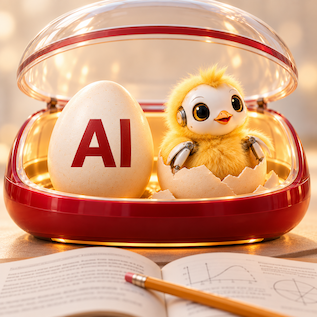
Academic Technology Announces AIncubator Faculty Innovators
Congratulations to the faculty selected for CSUN’s AIncubator Faculty Innovators program.
Selected faculty
- Marjan Asadinia — Assistant Professor in the Department of Computer Science
- Rechelle Mojica — Lecturer in Department of Assistive Technology Studies and Human Services, Tseng College
- Rasoul Narimani — Assistant Professor in Department of Electrical and Computer Engineering
- Scott Kleinman — Professor of English in the Department of English
- Svetlana V. Tyutina — Assistant Professor in the Department of Modern and Classical Languages and Literatures
- Yeawon Yoo — Assistant Professor in the Department of Systems and Operations Management, in the Nazarian College of Business and Economics
About the AIncubator
Facilitated by Academic Technology Faculty Fellows Dr. Deone Zell and Dr. Deniz Marti, the AIncubator is a cross-disciplinary faculty learning community focused on developing and testing responsible AI applications for challenges in teaching, learning, and research. Participants will collaborate with colleagues, Academic Technology, and IT partners to shape ideas into prototypes or workflows, test them with intended users, and refine them based on feedback. The program emphasizes practical value, reliable information, and responsible practices such as privacy, accessibility, accuracy, academic integrity, and human oversight.
A Few of the Project Concepts Faculty Will Be Working on
The selected projects explore several ways AI might support student learning and academic work:
- Creating an adaptive learning agent that help identifies students’ misconceptions and offers targeted explanations and practice based on instructor-approved materials.
- Developing an accessibility review of AI tools and learning materials, including testing with screen readers and other assistive technologies, documenting barriers, and creating resources for students and faculty.
- A course-specific agent that guides students through problem-solving by asking them to explain principles, assumptions, and reasoning, and to check AI-generated results.
- An AI-assisted topic-modeling workflow that helps users set up analyses, interpret results in disciplinary and historical context, and explore visualizations.
- A classroom workflow that helps students compare, evaluate, and revise AI-generated translations while considering accuracy, style, and cultural or linguistic bias.
- A reusable assignment framework for quantitative courses that teaches students to refine prompts and critically evaluate AI-generated solutions.
Academic Technology is excited to work with these Faculty Innovators.