China Institute October Tea Talk Explores Personal Risk Management and AI-Assisted Academic Research
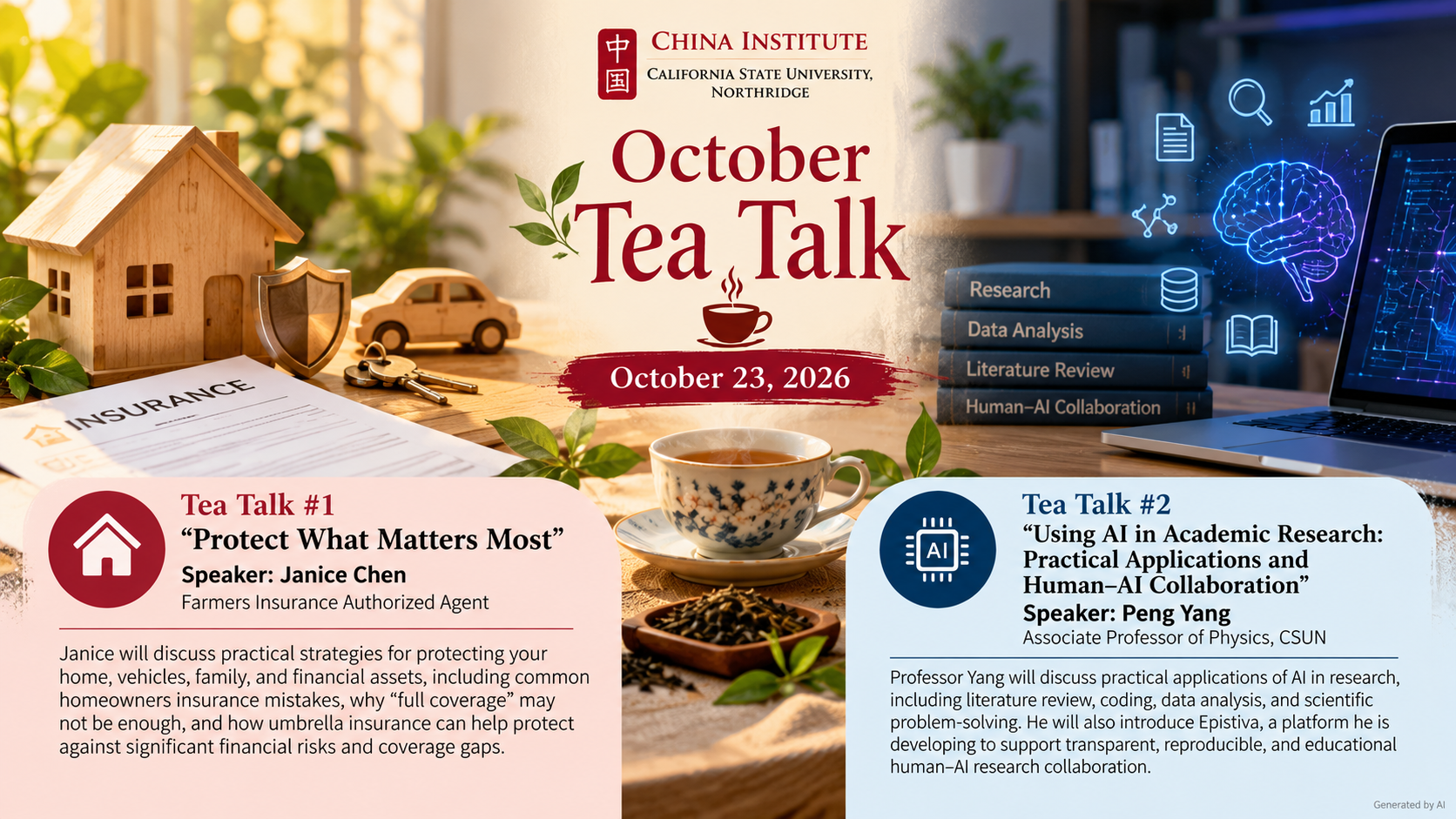
On October 23, 2026, the CSUN China Institute hosted its October Tea Talk in Valera Hall, bringing together faculty members, students, and guests for an afternoon of learning, discussion, and community engagement. The program featured two presentations:
“Protect What Matters Most: Practical Strategies for Protecting Your Home, Vehicles, and Financial Future,”presented by Janice Chen, an authorized agent with Farmers Insurance;
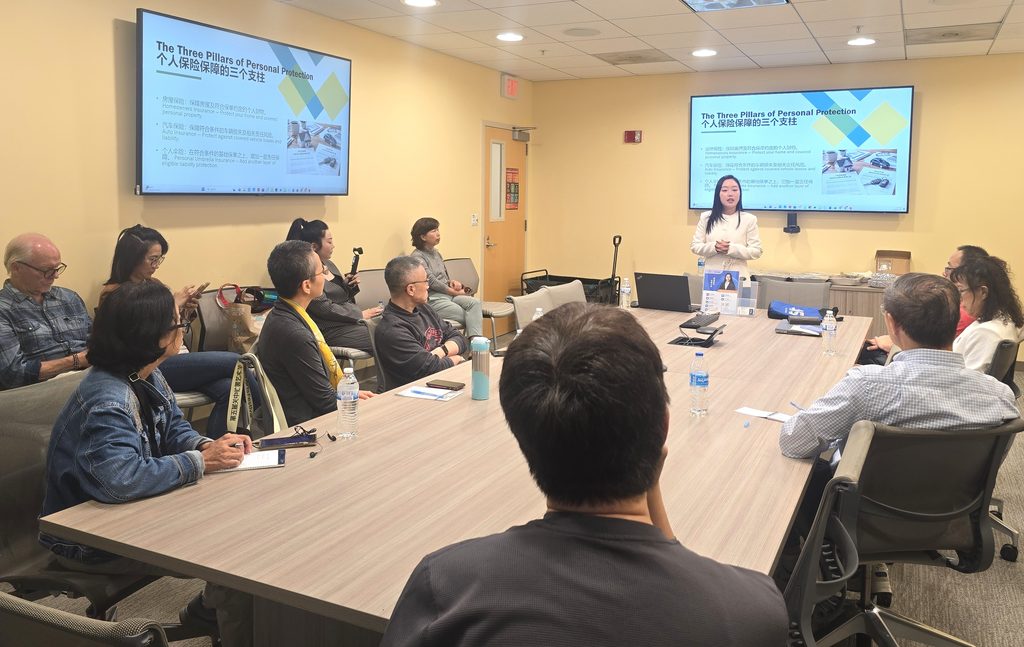

Janice Chen, principal of Joy Elite Insurance Agency and an authorized Farmers Insurance agent, delivered a presentation on practical strategies for protecting personal and family assets. A graduate of the University of California, Irvine, Chen has eight years of experience in the U.S. insurance industry and specializes in commercial, homeowners, automobile, and asset-protection insurance. Drawing on her expertise in property and casualty insurance and risk management, she shared practical information to help individuals and families safeguard their assets and long-term financial security.
Chen began by explaining the fundamentals of property and casualty insurance and emphasizing the importance of understanding insurance coverage before a loss occurs. She discussed three key components of personal protection: homeowners insurance, auto insurance, and personal umbrella insurance. Through real-world examples and case studies, she highlighted common coverage gaps, explained the difference between a home’s market value and its rebuilding cost, and addressed liability risks associated with homeownership and the financial consequences of inadequate coverage.
She also reviewed the major components of auto insurance, including liability, collision, comprehensive, and uninsured/underinsured motorist coverage. In addition, she addressed common misconceptions regarding “full coverage” policies and explained the circumstances under which such coverage may not provide complete financial protection.
The presentation concluded with a discussion of personal umbrella insurance and comprehensive risk-management strategies. Chen explained how umbrella policies can provide an additional layer of protection when liability claims exceed the limits of standard policies. She encouraged participants to regularly review their coverage, liability limits, household driving circumstances, and major life changes that may affect their insurance needs. Her presentation provided valuable guidance on managing risk, identifying coverage gaps, and making informed decisions to protect homes, vehicles, assets, and families in an increasingly complex financial environment.
“Using AI in Academic Research: Practical Applications and Human–AI Collaboration,” presented by Dr. Yang Peng, Associate Professor of Physics and Astronomy at CSUN.
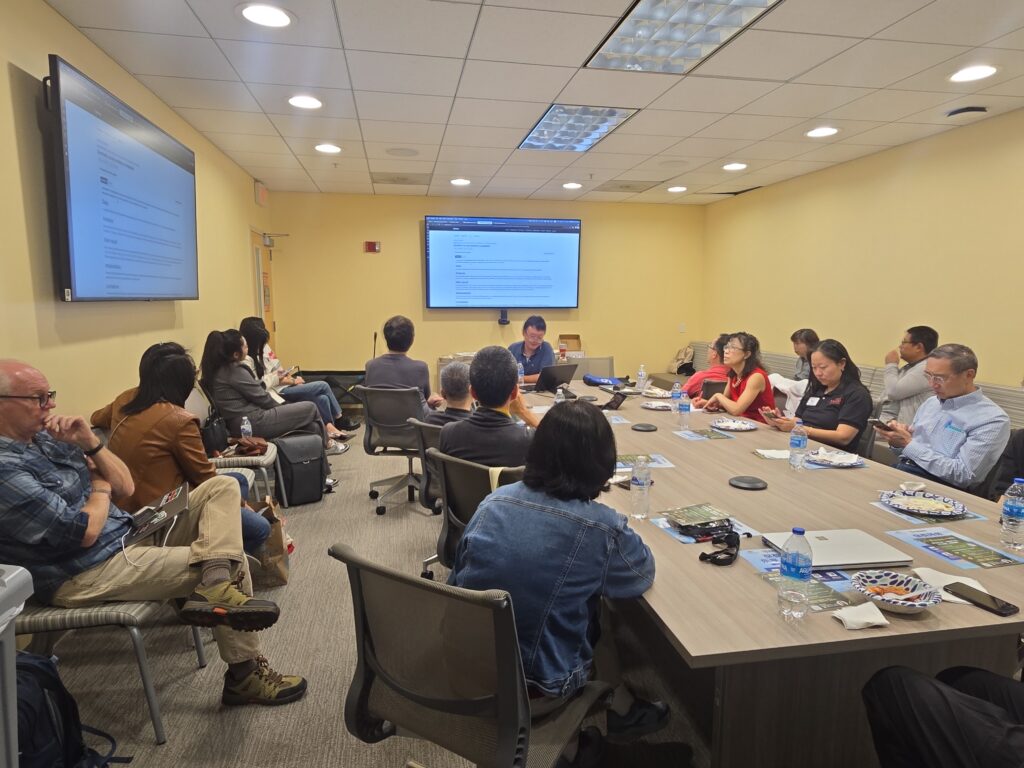
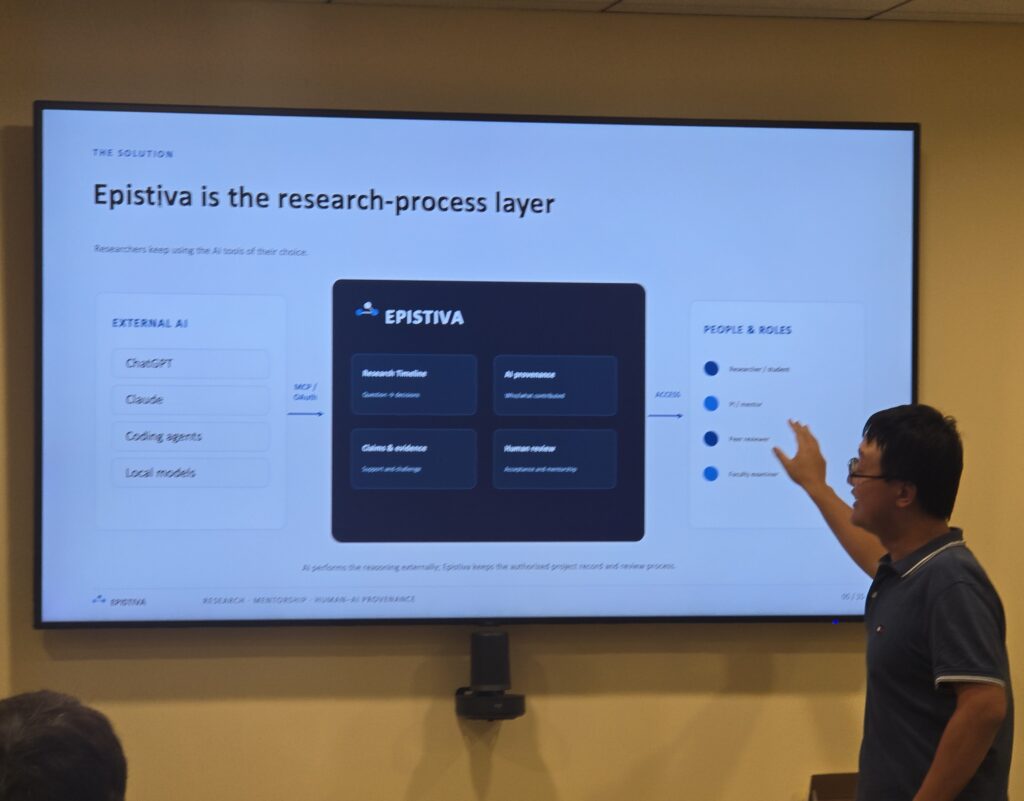
Dr. Yang Peng, Associate Professor of Physics and Astronomy at CSUN, presented “Using AI in Academic Research: Practical Applications and Human–AI Collaboration.” His presentation examined how rapidly advancing artificial intelligence tools are transforming the research process and discussed ways researchers can integrate AI into their work while maintaining human judgment, critical thinking, and academic responsibility.
Dr. Peng highlighted applications of AI across multiple stages of research, including idea generation, literature review, research-question development, coding, data analysis, and problem-solving. To demonstrate these applications, he used the relationship between coffee and health as a practical example. He showed how AI could help researchers refine a broad question—such as whether coffee is harmful to health—into more focused and testable research questions involving specific variables, populations, and measurable outcomes.
The demonstration illustrated how AI can support research design, identify relevant literature, suggest analytical approaches, and help researchers consider methodological issues such as confounding variables, bias, exposure measurement, and interpretation of results. At the same time, Dr. Peng emphasized that AI-generated ideas and recommendations must be carefully evaluated, verified, and refined by researchers rather than accepted uncritically.
A key feature of the presentation was the introduction of Epistiva, a research platform being developed by Dr. Peng to promote transparent and educational human–AI collaboration. The platform is designed to document interactions between researchers and AI systems, organize research projects, preserve important elements of the research process, and support faculty mentorship of students. Throughout the session, Dr. Peng underscored the importance of keeping human expertise at the center of AI-assisted research while using AI to make research more transparent, reproducible, efficient, and educational.
The CSUN China Institute extends its appreciation to Janice Chen, Dr. Yang Peng, and everyone who participated in the October Tea Talk. The event also provided an opportunity for participants to connect and continue their conversations over lunch, generously sponsored by Janice Chen.
Through its Tea Talk series, the China Institute continues to provide a welcoming forum for interdisciplinary learning, professional exchange, and meaningful connections among faculty members, students, and members of the broader community.
Stay tuned for more sessions in our Tea & Talk Series—we look forward to continuing these enriching discussions and welcoming you to future events!
Stay connected—follow us on Instagram for the latest updates on our events and activities